
What Does “Ground Contact Wood” Actually Mean?
What Does “Ground-Contact Wood” Really Mean?
If you’ve been looking at fence quotes or lumber options, you’ve probably seen the term “ground-contact” used to describe fence posts or lumber. It sounds reassuring — like the wood is made to survive underground. But most homeowners don’t realize what that label actually means, or what it doesn’t.
Understanding this one detail explains why so many fences in Ohio fail early.
What “Ground-Contact” Is Supposed to Mean
Ground-contact wood is usually pressure-treated lumber that’s been soaked in chemicals designed to slow rot and insect damage. It’s rated to be used where wood touches soil, which is why it’s commonly used for fence posts.
On paper, that sounds perfect. In real life, it’s not always enough.
Why Ohio Soil Is Hard on Fence Posts
Ohio ground stays damp. Add in heavy rain, clay soil, and freeze-thaw cycles, and posts spend much of their life sitting in wet, moving soil. That moisture and movement is what breaks wood down.
Even pressure-treated posts eventually start to deteriorate underground. When that happens, the post weakens, shifts, and the fence begins to lean.
The Hidden Problem With Treated Posts
Pressure-treated lumber is made from softer wood that’s infused with preservatives. Over time, those chemicals leach out, especially in wet soil. As the wood dries unevenly, it twists, cracks, and loses strength.
That’s why you often see treated posts rot at the ground line — right where moisture and oxygen meet.
Why Mae Fence Uses Heart-Center Cedar Instead
At Mae Fence, we don’t rely on chemical treatment to protect our posts. We use heart-center cedar — posts cut from the dense, solid core of the tree.
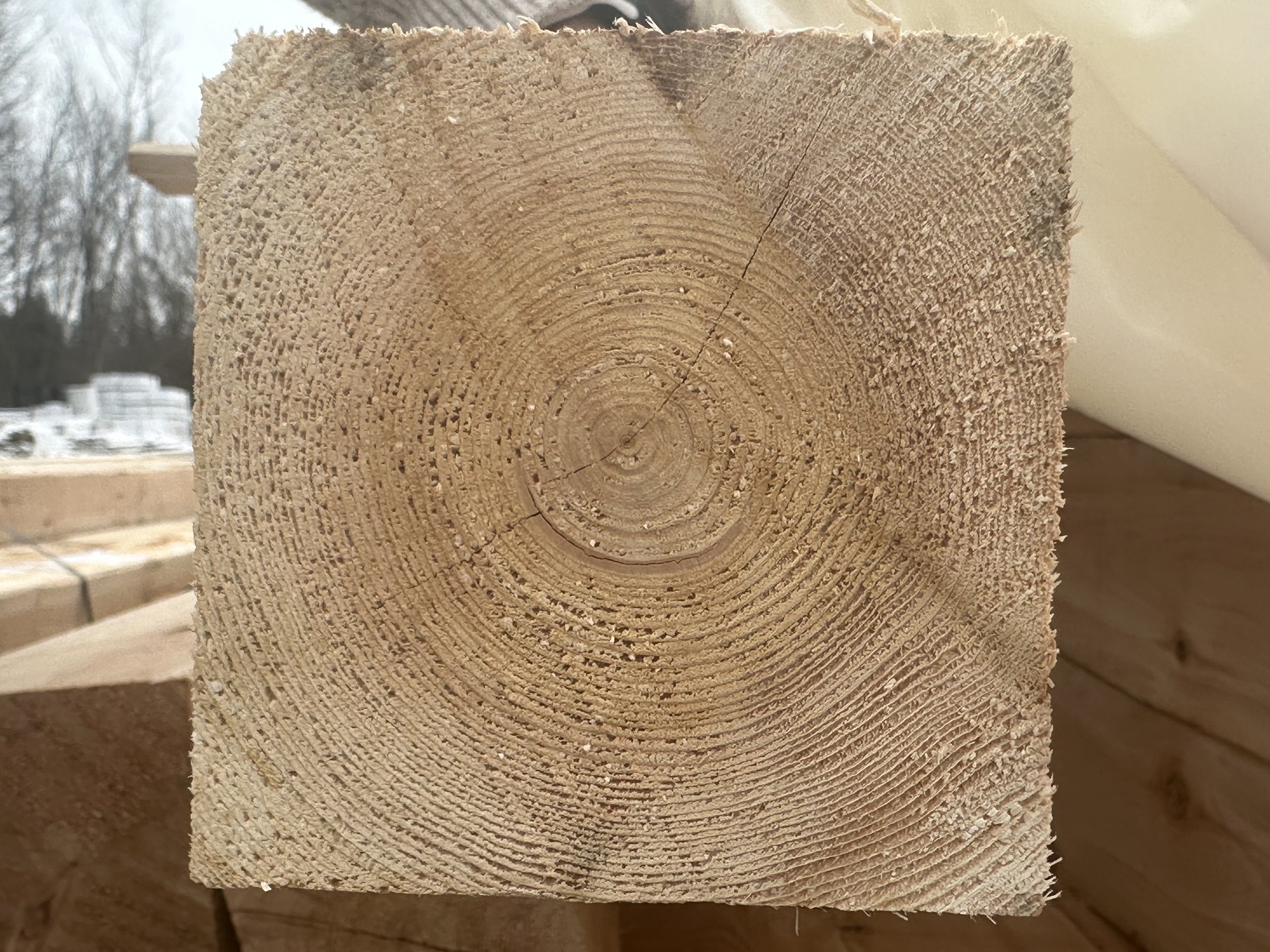
That center cut naturally resists rot, insects, and moisture. It stays straighter and stronger than softer treated lumber, especially underground. When you look at the end of one of these posts, you’ll see a tight bullseye of growth rings — that’s the part of the tree built to last.
What This Means for Your Fence?
A fence is only as strong as the posts holding it up. When posts twist or rot, everything attached to them moves with it.
Using our heart-center cedar posts means:
Straighter fences
Gates that stay aligned
Less shifting in Ohio soil
A longer-lasting fence
That is why we build every Mae Fence this way — and why we stand behind it.