
Invisible Fence vs Real Fence: What’s Better for Ohio’s Weather
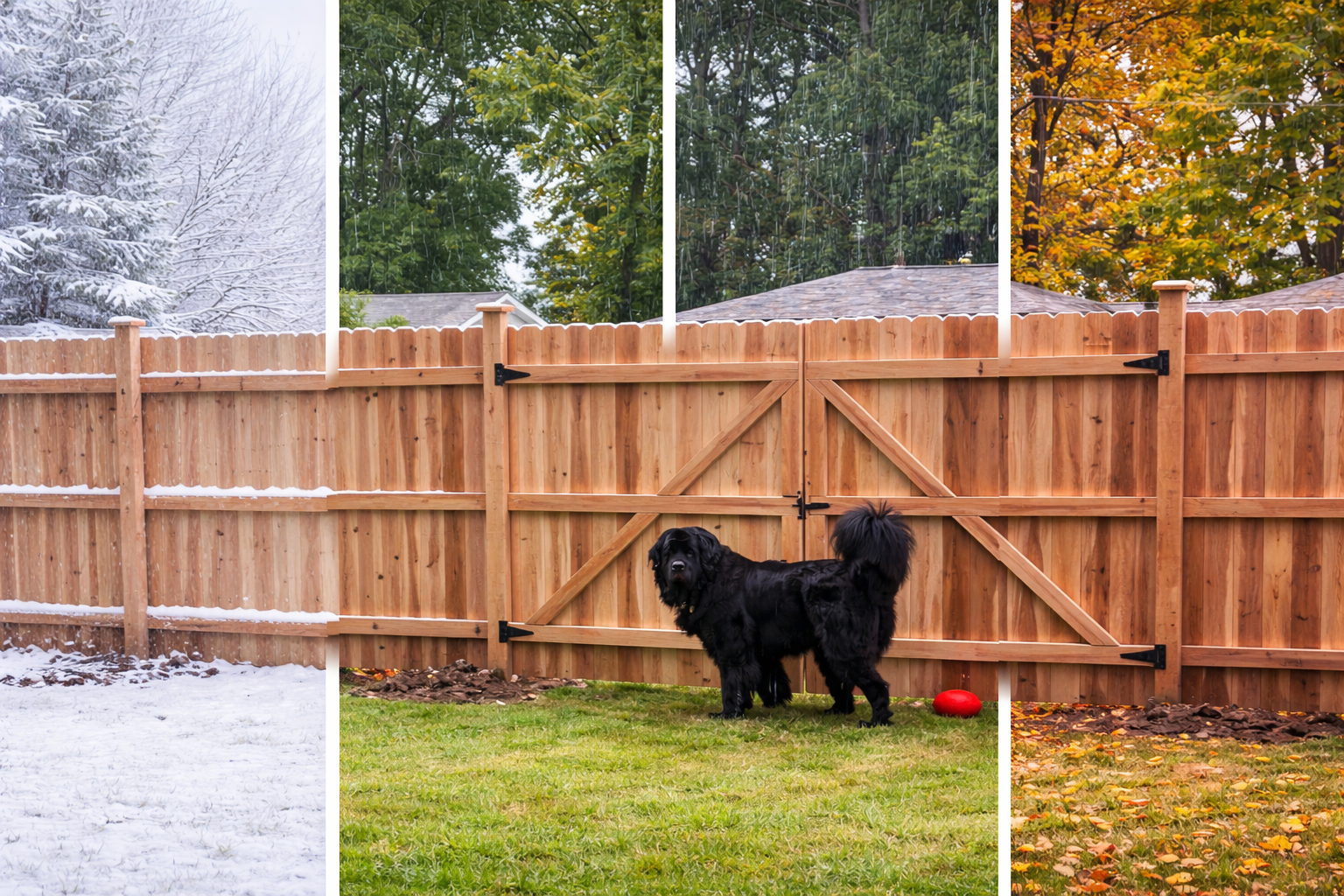
Ohio’s unpredictable weather can make invisible fences far less reliable than they seem. While they may work in ideal conditions, the reality is that freezing winters, heavy rain, and constantly shifting soil put serious stress on anything buried underground — including invisible fence wires.
During the winter, the ground freezes, expands, and then shifts again as it thaws. That movement can stretch or even break buried wires without you realizing it. Snow adds another layer of uncertainty. When boundary flags get covered, many dogs lose their visual reference and begin testing the limits.
Weather also brings power and equipment challenges. Storms, outages, and cold temperatures can interfere with the system and drain collar batteries faster than expected. We’ve had plenty of homeowners reach out to Mae Fence after dealing with repeated repairs and system failures — often after just a season or two of frustration.
In the warmer months, everyday yard work becomes another risk. Aeration, landscaping, drainage projects, and digging are some of the most common ways invisible fence wires get accidentally cut or damaged. On top of that, ongoing soil movement can shift the original boundary over time, making the system even less reliable.
With a physical fence, those concerns disappear. There are no buried wires, no reliance on power, and no need for ongoing training or conditioning. A properly built fence is designed to handle Ohio’s full range of weather — from freezing snow and ice to summer heat and heavy rain. That kind of consistency gives homeowners true peace of mind, all year round.